
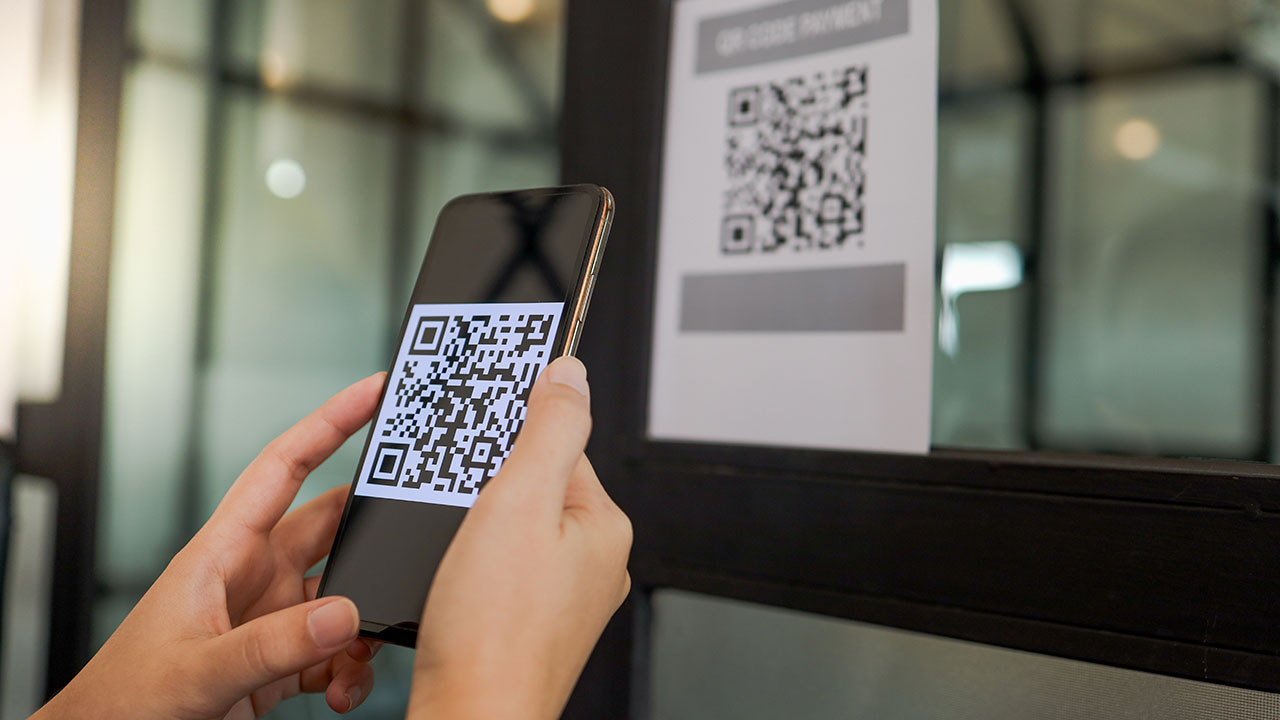
Why Your Tradeshow Investment Dies at the QR Code Scan
You just dropped $10,000+ on a booth at your biggest convention of the year. Four days of standing, shaking hands, giving the same pitch 200 times. You collected badge scans, handed out brochures, watched potential buyers scan your QR code for “more information.”
Then what?
They scan. They land on your generic homepage. They can’t find the specific product you just showed them. They close the tab. Your competitor, who they also met at the show, sends a follow-up email with a direct link to exactly what they need. Guess who gets the RFQ?
This is where many organizations lose qualified prospects. Not at the booth. Not in the pitch. At the QR code.
So, why is the QR code important? Because you could be missing folks that want to chat, but you may be too busy to speak with, because you’re connecting with someone else. Can we all agree that events are a gigantic investment in time and money? That’s why you need that little box with a bunch of squares, it’s a catch-all.
The $10K+ Question Nobody’s Asking
Here’s what I see when I look at LinkedIn posts from companies: booth photos. “Visit us at booth 2847!” “Great conversations at XYZ !” “Thanks to everyone who stopped by!”
But I never see: “Here’s what happened after the show.” Is it because you’re so overwhelmed with leads? Or is it because nothing happened after the show?
The typical post-show strategy:
- QR code goes to the homepage
- Maybe there’s a “We’re at [Show]!” banner that disappears a week later
- Prize drawing that collects emails for a list
- Generic “nice to meet you” email sent to everyone
That’s it. That’s where $10,000+ in booth investment goes to die.
The Three Ways QR Codes Can Kill Your ROI
1. The Generic Homepage Redirect
Someone scans your QR code at the booth. They were interested in a specific machine, a particular service, or that new automation solution you just demoed. The QR code dumps them on your homepage with a navigation menu and a stock photo of your building.
What were they looking at? What booth were they at? What problem were they trying to solve?
They don’t remember. You had 200 conversations that day. They had 50. The context is gone.
I do this myself when I’m researching vendors. I’ll scan a QR code, land on a generic page, and immediately bounce. If I can’t find what I just saw within 10 seconds, I’m done. Your competitor’s site is one tab over.
2. The Gated Prize Entry Trap
“Scan to enter our drawing for [expensive item]!”
Cool. I scan. I get a form asking for: name, company, email, phone, job title, company size, role in purchasing decisions, current suppliers, budget timeline, and whether I want a sales rep to contact me.
I wanted to learn about your product. You wanted my contact information before providing any value.
Here’s the thing, the winner will absolutely remember you. They got something valuable from you, and that matters. But will they actually do business with you? Maybe. Maybe not. You can’t control who wins, you can’t rig the system to give it to your best prospects or filter out the tire kickers.
But what you CAN control is staying in front of everyone who entered. And here’s an opportunity most organizations miss: Someone just won a $500 item from you, if the winner isn’t the decision maker, ask for an introduction to who is. They might be willing to connect you with their boss. Or they might not. But you won’t know unless you ask.
The real issue isn’t the prize drawing itself. It’s treating it like the entire strategy. The drawing gets you contact info. What happens next determines whether it was worth it.
3. The Dead End
This is a terrible situation for everyone. QR code goes to… a PDF. Or a page that says “Thanks for visiting our booth!” with no additional information. Or, and I’ve seen this multiple times, a page that doesn’t load because it was set up specifically for the show and broke when someone changed the site structure the day of the show.
You spent $10,000+ to create a connection, and the technology failed at the critical moment.
What Actually Works: The Post-Scan Experience That Doesn’t Waste Your Investment
Here’s what the QR code should do:
Land on a show-specific page. Not your homepage. A page that says “Thanks for visiting us at [TRADE SHOW]” with the specific products you showcased, the demos you ran, and resources directly related to what people saw at your booth.
Track the scan. Different QR codes for different materials. Product sheet gets QR code A. Booth banner gets QR code B. Demo station gets QR code C. Now you know what interested them, not just that they scanned something. Oh, and if you are using a QR code, please purchase one, don’t get one that expires in a week.
Provide value immediately. Spec sheets, technical documentation, calculator tools, comparison guides. Whatever helps them move forward on the decision they’re researching. Don’t gate it. Don’t make them fill out a form. Just give them the information.
Set up the next step. “Want to see this in your facility? Schedule a demo.” “Questions about implementation? Here’s our technical team’s contact.” “Researching options? Here’s how we compare to [common alternatives].” Make the path forward obvious.
The Follow-Up That Actually Follows Through
The QR code gets them to your site. Now what?
Most organizations send one email: “Thanks for visiting our booth at [SHOW]. Let us know if you have questions.”
That’s not a follow-up. That’s checking a box.
Here’s what I respond to when I’m researching vendors:
Specific reference to what I was looking at. If I was asking about automation for a specific process, send me a case study about that exact process. If I was choosing between you and a different software, send me a customer facing battle card. Show me you remember the conversation.
Information I can actually use. ROI calculators. Implementation timelines. Technical requirements. Answers to the questions I asked at the booth and the questions I didn’t know to ask yet.
No pressure. I’m researching. I might be 6 months from a decision. Send me useful information without demanding a meeting. When I’m ready to talk, I’ll remember who was helpful versus who was pushy.
Why This Matters More Than You Think
When I’m vetting a vendor, I do four things:
- Look at their website (Can I find what I need? Is it usable?)
- Check reviews (Google, industry-specific review sites, what do verified customers say?)
- Search for them on Reddit and industry forums (What do people actually say in unfiltered conversations?)
- See if they show up when I ask specific questions (Do they have content that answers my actual problems? This is going to be HUGE for AEO, stay tuned for more articles on that)
If your QR code sends me to a dead end, you fail step one. If you have poor reviews or no presence where buyers research, you fail steps two and three. If AI tools and search engines can’t find your answers, you fail step four.
The organizations who understand this get it: the tradeshow is just the handshake. The real sale happens in the research phase after the show, when the buyer is comparing options and trying to figure out who actually understands their problem. Just make sure the handshake works (QR code, landing page, etc.) ”
The Real Cost of Getting This Wrong
You’re not just losing the people who scanned your QR code. You’re losing their research process.
They scan. They land on your generic homepage. They can’t find what they need. So they Google it. They ask Reddit. They search industry forums. They ask ChatGPT, Claude, Perplexity or are relying on AI Overviews for which vendors to consider.
And you’re nowhere. No helpful content. No forum presence. No citations in AI answers. Just a generic website that made them work too hard to find basic information.
Meanwhile, your competitor—who also spent $10K+ on a booth—shows up everywhere they look. Forum posts answering technical questions. Content that AI cites. Landing pages that actually match what they saw at the show.
Same booth investment. Completely different digital strategy. Guess who gets the business?
Start Here
Before your next show:
Audit your QR code destination. Scan it yourself. Where does it go? Can you find what you showcased within 10 seconds? Would you stay on this page if you were researching vendors?
Build show-specific landing pages. One page per show, updated for what you’re actually showcasing. Make it easy to find what people saw at your booth.
Track what people care about. Different QR codes for different materials. See what gets scanned, what gets clicked, what drives actual inquiries.
Map the post-show journey. They scanned your code. Now what? What’s the logical next step? How do you stay useful during their research phase?
Remember, the booth gets you the handshake. The digital experience determines whether you get the deal.
You spent $10,000+ on the booth. Spend 10 hours making sure the QR code doesn’t waste that investment.
Follow SANscript on LinkedIn – next week we’ll cover where your prospects actually research after the show (and why you’re probably not there).
We help organizations turn connections into customers through accessible, searchable websites and digital strategies. If you’re tired of watching your show investment disappear at the QR code scan, let’s talk.