
Getting Cited by AI: How ChatGPT & Perplexity Choose Their Sources
Your prospect walks away from your tradeshow booth. Back at the office, they open ChatGPT and type: “Best CNC machining providers in the Midwest.”
ChatGPT returns five recommendations. You’re not one of them.
You spent $10K on the booth. You make 200 connections. You have the expertise. But when AI tools answer the exact question your prospect is asking, you’re invisible.
This isn’t about AI “not knowing you exist.” It’s about understanding how AI actually finds and cites sources, and why most manufacturers are completely missing the mechanics of that process.
The “Optimize for AI” Misconception
I keep hearing this: “You need to optimize your content for AI.” As if AI models have preferences, as if they’re sitting there deciding which companies to recommend based on some secret algorithm.
That’s not how this works.
I use ChatGPT, Perplexity, Gemini, and Claude regularly for research. I’ve watched what gets cited and what doesn’t. The sources that show up aren’t random, and they’re not based on AI “liking” certain companies.
Britney Muller (Founder of Orange Labs) recently broke this down in a way that made me stop and reread it a few times. Once it clicked, it was obvious, but here’s the distinction most people miss: “LLMs don’t favor anything. They’re not information retrieval systems; they’re next-token predictors. They guess the most statistically likely response based on patterns in training data.”
The search happens in a layer called RAG (Retrieval-Augmented Generation). The AI itself? It doesn’t remember where anything came from. It can’t cite you on its own.
How AI Actually Finds and Cites Sources
When someone asks ChatGPT or Perplexity a question, this is what actually happens:
Step 1: The Query User asks a question: “Best CNC providers in the Midwest”
Step 2: Search & Indexing The AI tool uses a search engine to find relevant documents. It’s looking through indexed content across the web – websites, Reddit threads, forums, news articles, blog posts.
Step 3: Retrieval The search engine returns the most relevant, authoritative documents it can find. This is where your content either shows up or doesn’t.
Step 4: Generation The AI combines information from those retrieved documents and generates an answer. The sources it cites are the documents that were retrieved in Step 3.
This is why Britney’s point matters: “Optimize for search engines (so retrieval-based AI can cite you) + earn third-party coverage (so the model already knows you before the prompt is typed).”
You’re not optimizing for AI. You’re optimizing for the search engines that AI tools rely on to find sources.
What Actually Gets Cited (And Why)
When I use AI tools for research, this is what consistently shows up as cited sources:
Authoritative sites:
- Established company blogs with technical expertise
- Industry publications and news outlets
- Government and educational sites (.gov, .edu)
Community discussions:
- Reddit threads (especially technical subreddits)
- Quora answers with high upvotes
- Industry forums like Practical Machinist
Structured, well-indexed content:
- Sites with proper schema markup
- Content organized with clear headings
- FAQ sections that answer specific questions
What DOESN’T get cited:
- Small company blogs with thin content
- Brand new sites without backlinks or authority
- Purely promotional content
- Sites with poor technical structure
- Content that search engines can’t parse properly
Notice the pattern? This is the same stuff that ranks well in traditional search. The Reddit presence we talked about in Part 2? That’s why it matters for AI citations. Reddit is authoritative, well-indexed, and full of specific answers to specific questions.
The Schema Markup Connection
Technical SEO and accessibility intersect with AI citations through something called schema markup.
Schema markup is structured code you add to your website. It tells search engines explicitly what your content is about. Instead of a search engine guessing “this page seems to be about CNC machining,” the schema says “this is a product page, this is the price, this is what we manufacture.”
You may need an expert to implement these if you aren’t comfortable with the technical side. That’s where SANscript can help. But the core concept is simple: you’re telling search engines explicitly what your content is, rather than making them guess.
I’m not going to get into technical implementation here. But schema comes in different types: FAQ Schema for question-and-answer pairs, Product Schema for what you sell, Organization Schema for your business info. Each type gives search engines structured data they can easily parse.
Search engines love this because it makes their job easier. AI tools? They rely on those same search engines. When ChatGPT needs to find information, it’s using search engines that prioritize well-structured, schema-marked content.
Example 1: FAQ Schema
Let’s say you have a page about your CNC machining services. Without schema, it’s just text. With FAQ schema, you’re explicitly telling search engines which questions you’re answering and what the answers are.
For instance, a question like “What materials can you machine?” gets paired with your answer “We machine aluminum, stainless steel, titanium, and specialty alloys…” When someone asks an AI “What materials can [manufacturer] work with?” the search engine can pull that exact Q&A pair. The AI can cite you directly.
Example 2: Product Schema
For a specific machine or service, Product Schema lets you define what you’re offering, pricing ranges, and availability. Instead of search engines guessing what “5-Axis CNC Machining” means, you’re telling them it’s a service, describing it as “Precision 5-axis machining for complex aerospace components,” providing price ranges, and indicating availability.
This structured data makes it exponentially easier for search engines (and by extension, AI tools) to understand what you offer and when to cite you.
Example 3: Organization Schema
Basic information about your company can be structured as Organization Schema. Your company name, location (city and state), the services you provide, and contact information all become explicit data points rather than text search engines have to interpret.
This helps AI tools understand who you are, where you’re located, and what you do. When someone asks for manufacturers in the Midwest, this data helps you show up.
Why This Overlaps With Accessibility
Most manufacturers don’t realize this: the same practices that make your site accessible to people using screen readers make it readable by AI search tools.
Screen readers need:
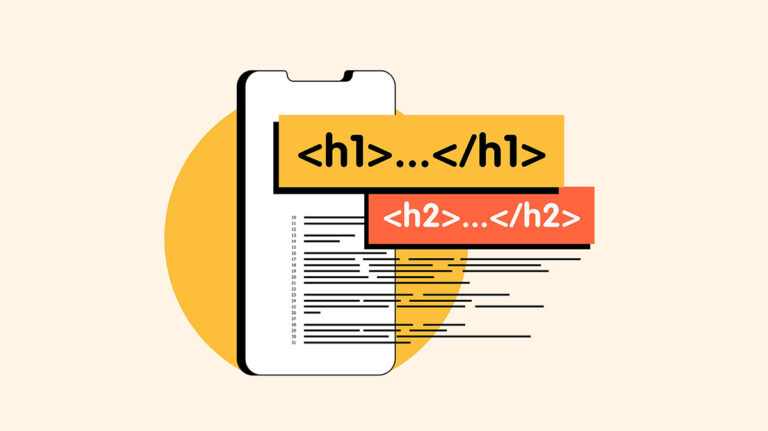
- Proper heading structure (H1, H2, H3)
- Descriptive link text
- Alt text on images
- Semantic HTML
- Structured content
Search engines and AI tools need the exact same things.
When you structure your content properly for accessibility, you’re simultaneously making it easier for search engines to index and AI tools to cite.
That PDF spec sheet you handed out at the tradeshow? If it’s just a PDF sitting on your server, search engines struggle to parse it. Screen readers struggle to read it. AI tools can’t cite from it.
Convert it to a properly structured blog post with schema markup? Now it’s:
- Accessible to people using assistive technology
- Indexable by search engines
- Citable by AI tools
- Discoverable when prospects are researching
Same content, completely different discoverability.
The Authority Signal Problem
Even with perfect schema markup, there’s another layer: authority.
Search engines (and the AI tools that use them) prioritize authoritative sources. If two sites have identical schema markup and answer the same question, the one with more authority gets cited.
This is where Parts 1 and 2 of this series connect:
Part 1: Your tradeshow QR code experience matters because it’s your first impression. If prospects land on a broken, inaccessible page, you’ve lost credibility.
Part 2: Your Reddit and forum presence matters because it builds third-party authority. When other people recommend you in community discussions, that’s a signal search engines recognize. If you’re not there, prospects can’t find you in the research phase and you’ve lost trust before you even knew they were looking.
Part 3 (this article): Your technical infrastructure matters because even with authority, if search engines can’t parse your content, AI tools can’t cite you.
All three work together. Skip one, and the system breaks.
Quick Wins You Can Implement This Week
You don’t need to rebuild your entire website to start getting cited by AI tools. Here are concrete steps:
1. Add FAQ Schema to Your Service Pages
Take the five most common questions prospects ask at tradeshows and turn them into a FAQ section on your site. Implement FAQ schema markup. This takes 2-3 hours and makes those Q&A pairs explicitly available to search engines.
2. Convert Your Top 3 PDF Resources to Blog Posts
Here’s my take: PDFs are lazy. Everything that matters should be on your website as actual web pages. It’s just as easy to share a link as it is to share a PDF. Easier, actually, because the link is accessible, searchable, and indexable.
The only real advantage PDFs have is print-friendliness, and that’s a conversation for another day. For discoverability, for accessibility, for AI citations, web pages win every time.
Take your three most valuable PDFs and convert them to properly structured blog posts with:
- Clear H1/H2/H3 headings
- Product or Service schema where relevant
- FAQ sections for common questions
- Descriptive link text and alt text on any images
3. Implement Organization Schema
Add basic schema to your About or Contact page that tells search engines who you are, where you’re located, and what you do. This is foundational data that helps AI tools understand your business.
4. Structure Your Technical Content
If you write blog posts or create technical resources, use proper heading hierarchy. Don’t just make text bigger – use semantic HTML (H1 for main title, H2 for sections, H3 for subsections). This helps both screen readers and search engines understand your content structure.
5. Check Your Site Indexing
Google Search Console shows you if Google can index your pages properly. If Google can’t index them, AI tools won’t find them either.
Abby Gleason (Senior Product Manager, SEO at Upwork) a few months ago pointed out that SEOGets unlocks better data visualization from GSC data. Trending queries, branded vs. non-branded splits, easier filtering. She still uses GSC, but SEOGets makes the data actually usable.
Either way, look for indexing errors, crawl issues, or mobile usability problems. Fix the basics first.
Tying It All Together
You met a prospect at a tradeshow (Part 1). They scanned your QR code and had a good experience on your site.
They went back to the office and researched you on Reddit (Part 2). They found you answering technical questions, building credibility in the community.
Now they’re asking ChatGPT or Perplexity for recommendations (Part 3). Because you have:
- Authoritative third-party presence (Reddit, forums)
- Properly structured content (schema markup, semantic HTML)
- Accessible, well-indexed pages
The AI cites you.
This isn’t magic. It’s the mechanical reality of how AI tools retrieve and cite sources. They rely on search engines. Search engines prioritize authoritative, well-structured content. The same practices that make your site accessible make it discoverable.
Most manufacturers do tradeshows well. They follow up with leads. They send emails. They make calls. But they’re missing the parallel research process happening while they’re doing that follow-up.
The prospect is Googling you. They’re asking ChatGPT. They’re checking Reddit. If you’re not showing up in those searches, if AI tools aren’t citing you, if community discussions don’t mention you, your follow-up is fighting an uphill battle against competitors who do show up.
The companies winning aren’t just doing tradeshows and follow-up. They’ve built the digital infrastructure that supports the research prospects are doing on their own.
Coming Up in Part 4
In the next article, we’ll tackle the follow-up strategy that keeps you top-of-mind after the tradeshow ends. You’ve got the handshake, you’ve built presence where they research, and you’re getting cited by AI. Now how do you turn all of that into actual pipeline?
For now, audit your top 3-5 pages. Can search engines parse them properly? Do you have schema markup? Are your PDFs converted to searchable content?
If you’re not sure how to check any of this, reach out. I’m offering to implement schema markup on one page for free for the first few people who respond. You’ll see how it works in practice, and I’ll give you a template you can use for the rest of your site.
If you need help mapping out your technical SEO and schema implementation strategy, or want to understand where your site stands on AI discoverability, reach out to SANscript. We’re also offering a limited number of free website audits to help you understand where you stand.
This is still new territory for most, and getting the foundation right matters more than chasing every new tactic.
Source: Britney Muller’s LinkedIn post on RAG and AI citations